
Summary: The U.S. stock market can continue rising despite elevated valuations when corporate earnings, productivity, revenue growth, and economic resilience improve faster than investors expect. Yet higher prices and renewed volatility leave less room for disappointment. For investors, the key is distinguishing sustainable earnings growth from multiple expansion while managing concentration, interest-rate sensitivity, and realistic long-term return expectations.
Why Stocks Can Keep Climbing Even When the Market Looks Expensive
The U.S. stock market is entering a more complicated phase of its long-running advance. Investors are confronting a familiar tension: stock prices are high by historical standards, volatility can return quickly, and interest rates remain restrictive enough to matter. Yet corporate earnings are also growing strongly, revenues are expanding, and expectations for future profits remain constructive.
That combination explains why an expensive market does not automatically become a declining market.
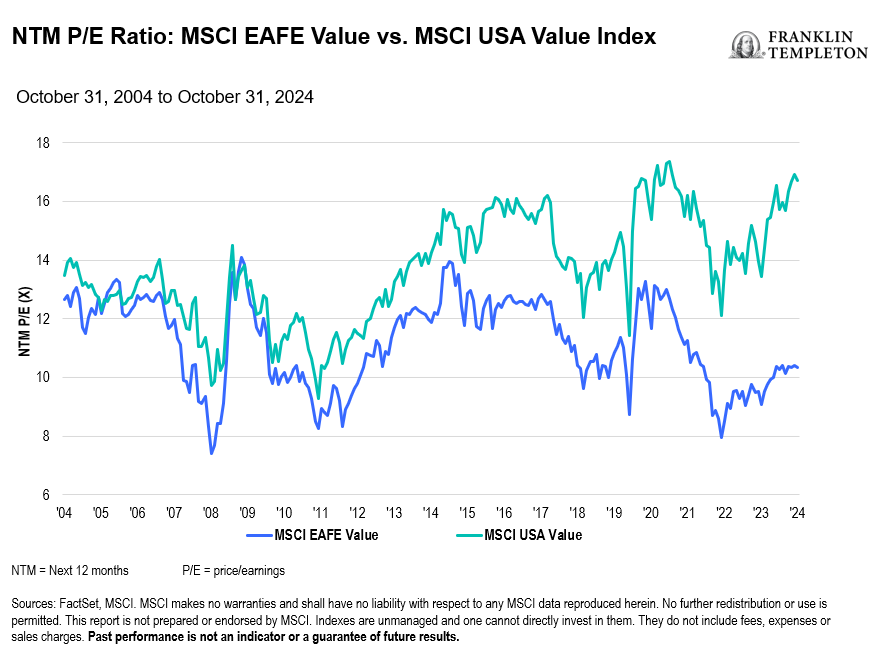
According to FactSet, the S&P 500’s forward 12-month price-to-earnings ratio was 20.0 as of August 7, 2026, slightly above its five-year average of 19.9 and meaningfully above its 10-year average of 19.0. At the same time, analysts were projecting roughly 30% earnings growth for the full year.
That distinction matters. A market can remain expensive because investors are paying too much for earnings, but it can also remain expensive because earnings are rising rapidly enough to justify a substantial portion of the price.
The more useful question for investors is therefore not simply, “Is the stock market overvalued?” It is: Are corporate earnings and cash flows growing fast enough to support today’s prices?
The answer is increasingly dependent on what happens outside the handful of companies that dominated the market’s earlier rally.
Earnings Growth Is Giving the Market a Fundamental Foundation
One of the strongest arguments for continued equity gains is the current pace of corporate earnings growth.
FactSet reported in early August that 88% of S&P 500 companies had reported second-quarter results, with 86% exceeding analysts’ earnings-per-share estimates. The blended year-over-year earnings growth rate had reached 50.4%, although that headline number was heavily influenced by unusually large gains at Alphabet and Amazon. Even excluding those two companies, FactSet estimated S&P 500 earnings growth at about 32%.
That is important because earnings ultimately provide the economic foundation for stock prices.
A company can experience a dramatic rise in its share price without producing much additional profit. That is usually a warning sign because the valuation multiple is doing most of the work. But when profits increase substantially alongside share prices, the relationship is healthier.
For example, imagine a company earning $5 per share with a stock price of $100. Its P/E ratio is 20. If the stock rises to $120 while earnings increase to $6.50, the P/E ratio actually falls to about 18.5. The stock has become more expensive in dollar terms but cheaper relative to its earnings power.
That is one of the central reasons the broader U.S. market can continue advancing even when investors describe valuations as elevated.
FactSet also reported that analysts increased their third-quarter bottom-up earnings estimate by 0.3% during July. In a typical quarter, analysts reduce estimates during the first month, making the increase noteworthy.
In other words, the market is not relying exclusively on optimistic stock prices. Analysts are also raising their expectations for corporate profits.
The Earnings Story Is Becoming Broader
For much of the recent bull market, discussions about the S&P 500 have centered on mega-cap technology companies and artificial intelligence. That concentration remains important, but the earnings picture is becoming broader.
FactSet reported that ten of the eleven S&P 500 sectors were showing year-over-year earnings growth during the second-quarter reporting season. Eight sectors were reporting double-digit growth. Energy, communication services, consumer discretionary, information technology, and materials were among the strongest.
Revenue growth is also providing evidence of broader corporate strength. FactSet estimated second-quarter S&P 500 revenue growth at 15%, which would represent the strongest quarterly revenue growth since the fourth quarter of 2021. All eleven sectors were reporting year-over-year revenue growth.
This matters because revenue growth is generally a more fundamental signal than accounting-driven changes in margins or investment gains.
A company can temporarily increase earnings by cutting costs, selling assets, benefiting from tax changes, or receiving investment gains. Sustained revenue growth, however, suggests that customers are continuing to buy products and services.
That does not eliminate risk. But it makes the market’s underlying support more substantial.
Why Valuations Still Deserve Attention
Strong earnings do not make valuation irrelevant.
At a forward P/E of 20, investors are paying a meaningful premium compared with the S&P 500’s longer-term average valuation. The premium reflects expectations for stronger profitability, higher productivity, durable technology advantages, and continued investment.
The problem is that expectations can become self-reinforcing.
When investors believe earnings will grow rapidly, they may pay a higher multiple. Higher prices can then encourage additional optimism, pushing valuations even further. Eventually, the market reaches a point where earnings must grow exceptionally quickly simply to justify existing prices.
This is where valuation risk becomes particularly important.
Consider two hypothetical markets. In Market A, stocks trade at 20 times earnings and earnings grow 10%. In Market B, stocks trade at 25 times earnings and earnings grow 10%. If both receive the same earnings growth, Market B has less valuation support because investors are already paying more.
A market with high valuations therefore does not need to crash. It may simply deliver weaker future returns if earnings fail to grow quickly enough.
That distinction is crucial for long-term investors. Valuation is often more useful as a measure of expected future returns than as a precise timing tool.
An expensive market can remain expensive for years.

Interest Rates Are Still One of the Biggest Variables
Interest rates remain one of the most important forces shaping the market’s valuation.
As of the Federal Reserve’s July 29 meeting, the federal funds target range remained at 3.50% to 3.75%. The Fed said economic activity was expanding at a solid pace, while inflation remained elevated relative to its 2% objective.
This creates a complicated environment for stocks.
Lower interest rates can support higher equity valuations because future corporate cash flows become more attractive when discounted at lower rates. They can also reduce borrowing costs and encourage investment.
But investors should not assume that every rate cut is bullish.
If rates decline because inflation is easing while economic growth remains healthy, stocks may respond positively. If rates decline because economic conditions are deteriorating rapidly, the effect can be very different.
The quality of the economic slowdown matters more than the direction of rates alone.
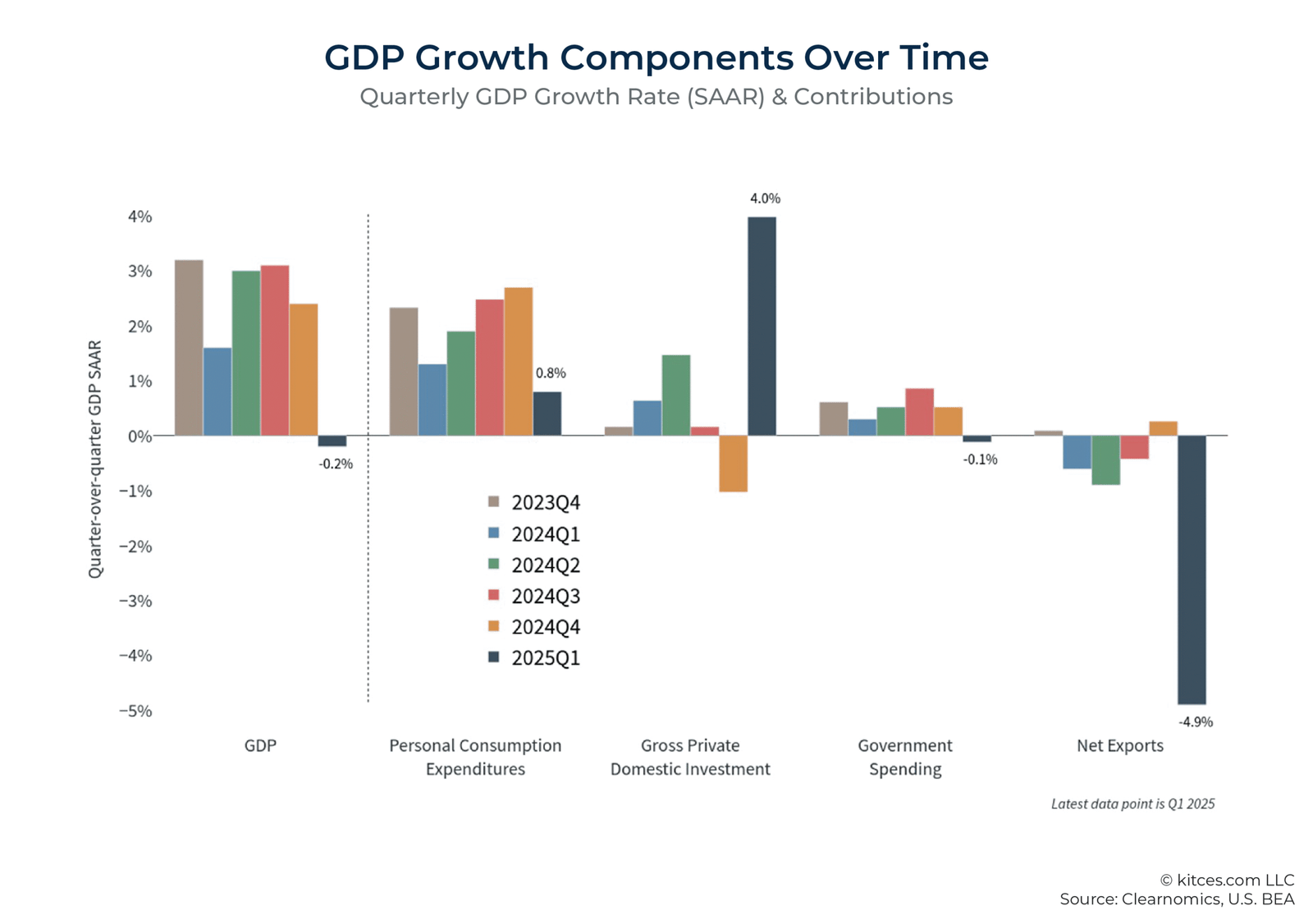
The latest GDP data illustrate why investors remain cautious. The Bureau of Economic Analysis reported that real U.S. GDP increased at a 1.5% annualized rate in the second quarter of 2026, down from 2.1% in the first quarter. Consumer spending, investment, and exports contributed to growth, while government spending declined.
That is slower growth, but not necessarily recessionary growth.
For the stock market, a moderate-growth environment can actually be constructive if inflation continues to ease and corporate productivity remains strong.
Inflation Has Improved, But the Job Is Not Finished
Inflation remains another reason investors should avoid assuming that the market’s upward trend will be smooth.
The Bureau of Labor Statistics reported that consumer prices increased 3.4% over the 12 months through July 2026. Core CPI, excluding food and energy, increased 2.5%.
Those figures are substantially better than the inflation rates seen during the post-pandemic inflation surge, but they remain above the Federal Reserve’s 2% objective.
For households, persistent inflation affects spending power. For companies, it can influence wages, input costs, pricing decisions, and profit margins. For investors, it can influence bond yields and the valuation investors are willing to assign to stocks.
A market can therefore continue rising while inflation remains above target, particularly if investors believe inflation is gradually moving lower.
But if inflation accelerates again, the valuation equation becomes more difficult.
What Higher Volatility Actually Means for Investors
Volatility is another source of anxiety, but it is often misunderstood.
The Cboe Volatility Index, commonly known as the VIX, measures market expectations for near-term S&P 500 volatility based on options prices. On August 25, 2026, the VIX was around 15.81.
That does not mean investors should conclude that risk has disappeared.
Volatility can rise quickly when markets face unexpected inflation data, geopolitical developments, changes in interest-rate expectations, disappointing earnings, or crowded positioning.
The important point is that volatility is not the same thing as permanent loss.
A 10% decline in an index is volatility. A company permanently losing its competitive advantage is a fundamental impairment.
Investors should therefore avoid treating every market decline as evidence that the long-term thesis has failed.
Market Breadth Could Become Increasingly Important
Another reason the market may have room to advance is improving breadth.
When only a small number of mega-cap companies drive an index higher, the market can become vulnerable to a reversal in those stocks. A broader advance can be healthier because more companies and industries are participating.
Recent trading has shown evidence of broader participation. MarketWatch reported on August 24 that 302 of the S&P 500’s 502 components were gaining in premarket trading despite slightly lower S&P 500 futures. Seven of the eleven major sector ETFs were also higher before the opening bell.
Breadth should not be treated as a guarantee. It is better understood as a diagnostic tool.
Investors can watch whether gains are spreading into industrials, financials, energy, materials, health care, and other sectors rather than remaining concentrated in a narrow group of technology companies.
If more companies participate while earnings estimates continue rising, the market’s advance has a stronger internal foundation.
AI Is Still Important, But the Investment Story Is Getting Larger
Artificial intelligence remains one of the biggest drivers of U.S. corporate investment.
The market’s AI thesis involves more than software companies. It includes semiconductor manufacturers, data-center operators, electrical equipment providers, utilities, industrial companies, networking firms, construction suppliers, and cloud infrastructure.
That creates the possibility of a broader productivity cycle.
But it also creates one of the market’s biggest risks.
Investors may eventually demand evidence that enormous capital spending produces equally large economic returns. If spending continues rising faster than revenue or free cash flow, valuations could become difficult to defend.
The latest earnings data illustrate both sides of this equation. Reuters reported that AI-related companies played a major role in second-quarter S&P 500 earnings growth, while noting that some gains were influenced by large mark-to-market investment gains at companies such as Alphabet and Amazon.
The lesson is straightforward: investors should distinguish between genuine operating earnings and gains that may not repeat.

What Could Keep the S&P 500 Rising?
Several forces could support additional gains even from elevated valuation levels:
- Continued earnings growth: Rising profits can gradually make existing valuations more reasonable.
- Revenue expansion: Broad revenue growth suggests businesses are still generating demand rather than relying exclusively on cost cutting.
- Productivity gains: AI and automation could allow companies to produce more output without proportional increases in labor costs.
- Broader market participation: More sectors contributing to returns can reduce dependence on a small group of stocks.
- Economic resilience: Moderate GDP growth can support corporate revenues even without a rapid expansion.
- Stable or declining inflation: Lower inflation pressure could eventually give the Federal Reserve greater policy flexibility.
- Capital investment: Continued spending on infrastructure, technology, energy, and manufacturing can create future earnings opportunities.
None of these factors guarantees higher prices. Together, however, they explain why valuation concerns alone have not stopped the market from advancing.
What Could Change the Market’s Direction?
The bullish case becomes weaker if earnings estimates begin falling, economic growth deteriorates sharply, inflation accelerates, or long-term Treasury yields rise significantly.
Investors should pay particular attention to the relationship between earnings expectations and stock prices.
If analysts continue raising earnings estimates while prices rise moderately, the market’s valuation may remain manageable.
If prices rise rapidly while earnings expectations stagnate or decline, the valuation risk becomes more pronounced.
This is why a headline such as “stocks are expensive” provides limited information by itself.
The better question is whether the price investors are paying is increasing faster than the underlying earnings power.
How Should Individual Investors Respond?
For most Americans investing through 401(k)s, IRAs, brokerage accounts, or diversified funds, the challenge is not predicting the next 5% move in the S&P 500.
It is building a portfolio that can survive both the upside and the inevitable periods of disappointment.
An investor with a 20-year retirement horizon may reasonably view short-term volatility differently from someone who needs the money within three years.
For example, suppose a 35-year-old investor contributes $1,000 every month to a diversified portfolio. A market decline may temporarily reduce the account balance, but the same decline can also allow future contributions to purchase more shares.
Now consider a 68-year-old investor withdrawing $4,000 a month. A major market decline can have a much greater practical consequence because withdrawals occur while assets are depressed.
The correct response to valuation risk therefore depends partly on the investor’s time horizon, cash-flow needs, and ability to tolerate losses.
A sensible review should include:
- How much of the portfolio is concentrated in one sector or company?
- How much money will be needed within the next five years?
- Is the portfolio dependent on continued double-digit equity returns?
- Would a 20% market decline force a change in lifestyle?
- Are bond and cash holdings appropriate for near-term spending needs?
- Is the investment strategy based on fundamentals or recent performance?
These questions are more useful than trying to identify the exact date of the next market correction.
Is the U.S. Stock Market Still a Reasonable Long-Term Investment?
For long-term investors, the answer does not depend entirely on whether the S&P 500 is cheap today.
The U.S. economy remains characterized by deep capital markets, innovative businesses, high corporate profitability, significant technology investment, and a large consumer base. Those structural strengths can support long-term equity returns.
But strong structural advantages do not eliminate valuation risk.
A great company can be a poor investment when purchased at an unjustifiably high price. Conversely, a high-quality business can become attractive again after a valuation reset.
This is why diversification remains important even when the U.S. market is performing well. Investors should avoid assuming that today’s strongest companies will always be tomorrow’s strongest investments.
The objective is not to eliminate uncertainty. It is to construct a portfolio that does not require perfect forecasting.
Frequently Asked Questions
1. Can the U.S. stock market keep rising when valuations are high?
Yes. High valuations do not automatically predict an immediate decline. If corporate earnings grow rapidly enough, earnings can catch up with stock prices and gradually reduce valuation pressure.
2. Is the S&P 500 overvalued in 2026?
The S&P 500 is trading above its historical average valuation based on forward P/E measures. FactSet reported a forward 12-month P/E of 20.0 in early August, compared with a 10-year average of 19.0.
3. Why are stocks rising despite high interest rates?
Stocks can rise when corporate earnings, productivity, revenue growth, and economic expectations outweigh the negative valuation effect of higher rates. Markets price future conditions rather than simply reacting to today’s interest rate.
4. What does the VIX tell investors?
The VIX measures the market’s expectations for near-term S&P 500 volatility based on options pricing. It is a gauge of expected turbulence, not a direct forecast of whether stocks will rise or fall.
5. Is volatility a reason to sell stocks?
Not necessarily. Volatility becomes more important when it reveals a fundamental change in earnings, economic conditions, or an investor’s ability to tolerate losses. Short-term price movements alone do not determine long-term investment outcomes.
6. Are earnings more important than stock valuations?
Both matter. Earnings determine the economic foundation of a company, while valuation determines how much investors are paying for those earnings. Strong earnings growth can support higher valuations, but excessive prices can still reduce future returns.
7. Is AI still driving the stock market?
AI remains a major driver of corporate investment and earnings expectations, but its influence is spreading into industrials, utilities, infrastructure, energy, semiconductors, and other industries.
8. Should investors wait for a market correction before investing?
Trying to predict a correction consistently is difficult. Investors with long time horizons may benefit from maintaining a disciplined contribution strategy rather than making decisions based entirely on short-term valuation fears.
9. What should investors watch if the market keeps rising?
Watch earnings revisions, revenue growth, profit margins, market breadth, inflation, Treasury yields, and Federal Reserve policy. The relationship between stock prices and earnings is particularly important.
10. What is the biggest risk to the current bull market?
One of the largest risks is a mismatch between expectations and fundamentals. If investors continue paying high prices while earnings growth slows substantially, the market could experience valuation compression even without a severe recession.
When Earnings Have to Catch Up With Expectations
The U.S. stock market does not need to become cheap to continue rising. It needs enough economic and corporate progress to justify what investors are already paying.
That is a higher bar than simply expecting another rally.
The strongest version of the bullish case is not that stocks are immune to valuation risk. It is that earnings, revenues, productivity, and broader corporate participation can continue improving fast enough to absorb some of that risk.
The cautious case is equally straightforward: when valuations are elevated, the margin for disappointment becomes smaller.
For investors, that makes discipline more valuable than prediction. A diversified portfolio, realistic return expectations, appropriate cash reserves, and regular attention to earnings trends can provide a more durable framework than attempting to guess when the next correction will begin.
The market can keep rising. It can also become more volatile along the way. Those two outcomes are not contradictory.
The Signals Worth Keeping in View
- Earnings growth: Watch whether profit growth remains strong after unusually large AI-related contributions.
- Revenue growth: Broad sales growth provides evidence that corporate strength is not purely accounting-driven.
- Valuations: Higher P/E ratios mean future returns depend more heavily on earnings delivery.
- Market breadth: Wider participation can make an advance less dependent on a handful of mega-cap stocks.
- Interest rates: Changes in Treasury yields and Federal Reserve policy can materially alter valuation assumptions.
- Inflation: Persistent inflation could limit monetary-policy flexibility.
- Portfolio concentration: Strong performance in a narrow group of stocks can quietly increase risk.
- Time horizon: Investors with different spending timelines should not respond identically to the same market volatility.