
Summary — 60 words:
Americans are using ETFs for more than broad S&P 500 exposure. Growth in active ETFs, bond funds, international strategies, factor investing, and targeted themes is giving investors more ways to build diversified portfolios. The shift creates opportunities for greater precision, but also introduces complexity. Understanding fees, overlap, liquidity, risk, and portfolio purpose remains essential before adding new ETF strategies.
The ETF Market Is Getting Much Bigger Than the S&P 500
For years, the simplest ETF conversation in America centered on one question: Which low-cost fund tracks the S&P 500? That approach remains powerful, but the ETF market has expanded far beyond a handful of broad U.S. equity indexes.
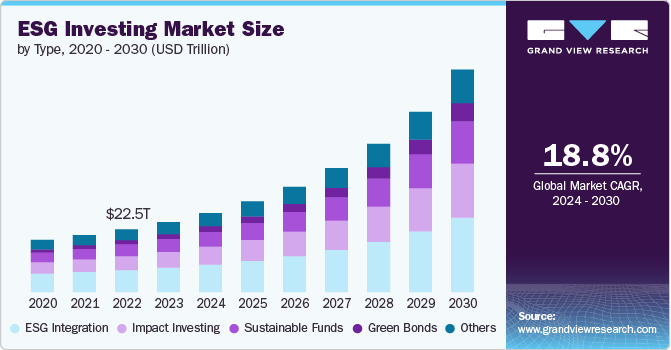
The numbers illustrate just how significant that expansion has become. The Investment Company Institute reported that U.S.-domiciled ETFs held $13.4 trillion in net assets across 4,495 funds at the end of 2025. By June 2026, total U.S. ETF assets had reached approximately $15.7 trillion.
That growth is not simply about more versions of the same index. Investors now have ETFs focused on bonds, international markets, small companies, value stocks, quality factors, dividends, commodities, specific industries, actively managed strategies and defined investment outcomes.
The result is a meaningful change in portfolio construction. The ETF is increasingly becoming a portfolio-building vehicle rather than simply an index-tracking vehicle.
That distinction matters for ordinary investors. More choices can make diversification easier, but they can also make a portfolio unnecessarily complicated. The challenge is no longer finding an ETF. It is understanding what role an ETF should play.
Why Americans Are Looking Beyond the S&P 500
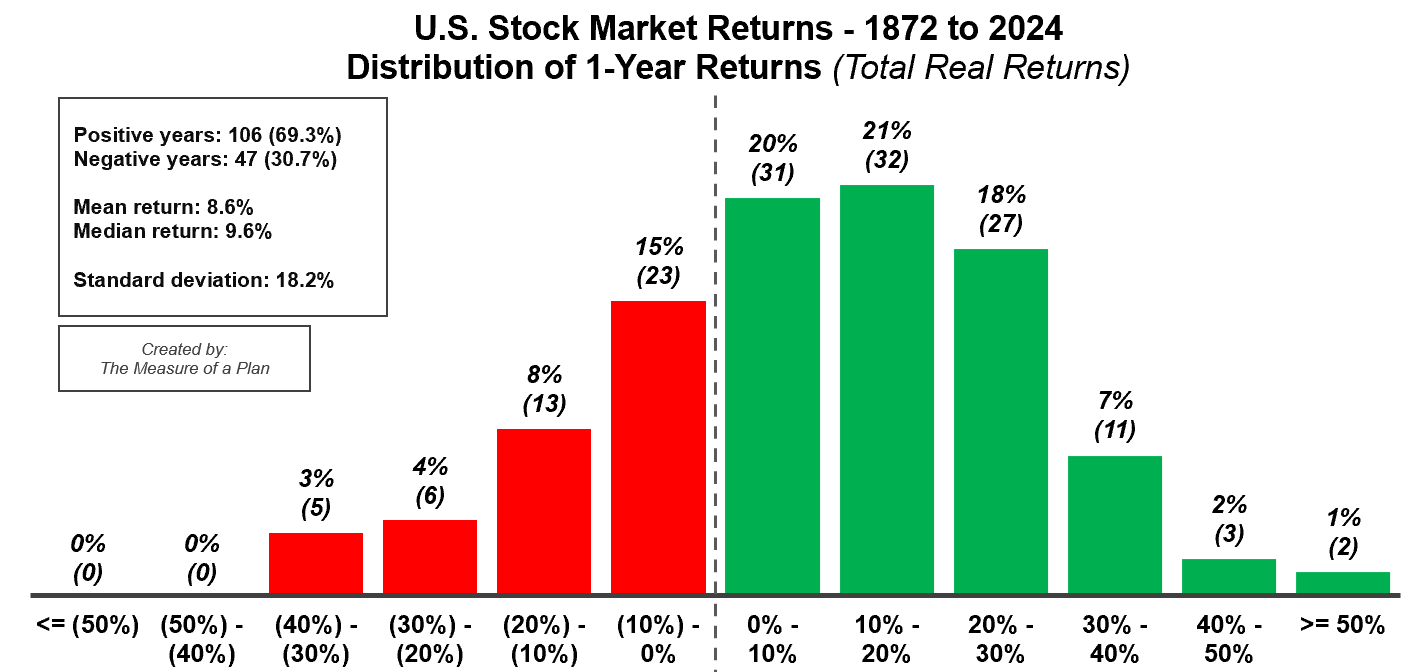
The S&P 500 provides exposure to 500 large U.S. companies, making it an efficient core holding for many long-term investors. But owning an S&P 500 ETF does not mean an investor owns the entire market.
A portfolio heavily concentrated in large U.S. companies can leave gaps in international equities, smaller companies, fixed income and other asset classes. The Securities and Exchange Commission emphasizes that diversification depends on how investments are spread across assets and securities, and that not every ETF is equally diversified.
Consider a hypothetical 35-year-old investor with $100,000 invested almost entirely in an S&P 500 ETF. The portfolio may be inexpensive and broadly diversified within large-cap U.S. stocks, but it still represents a relatively narrow slice of the global investment universe.
That investor might eventually ask several practical questions:
- Should international stocks have a larger role?
- Would bonds make the portfolio less volatile?
- Are smaller companies worth including?
- Does a dividend or value strategy add something genuinely different?
- Could an active ETF complement passive holdings?
- Is a thematic ETF actually diversification—or simply another form of concentration?
Those questions explain why ETF selection is increasingly becoming an exercise in asset allocation and portfolio design, not simply fund selection.
Active ETFs Are Moving Into the Mainstream
One of the most important developments is the rise of actively managed ETFs.
Traditional ETFs became closely associated with passive index investing, but that relationship has weakened. ICI reported that at the end of 2025 there were 2,454 actively managed 1940 Act ETFs with $1.4 trillion in assets, compared with 1,970 index-based ETFs holding $11.5 trillion.
Recent flow data suggests that active ETFs are attracting substantial investor attention. State Street reported that active ETFs represented 39% of U.S. ETF inflows during the first half of 2026, while low-cost ETFs accounted for 49%.
The attraction is straightforward. Investors can now access professional portfolio management inside an ETF structure that offers intraday trading, portfolio transparency and generally low investment minimums.
But active does not automatically mean better.
An active ETF may charge more than a basic index fund, take larger positions in particular companies or sectors, and produce results that depend heavily on the manager’s decisions. Investors therefore need to evaluate the strategy rather than assuming that the active label represents an advantage.
For example, someone holding a broad U.S. index ETF might use an active ETF to gain a differentiated approach to fixed income or international equities. That can make sense if the second fund adds a distinct exposure. Buying an active ETF that owns nearly the same companies as the core index fund, however, may add complexity without adding much diversification.
Bond ETFs Are Becoming More Important
Another major change is the growing role of bond ETFs.
Investors once tended to think of ETFs primarily as equity products. Today, fixed-income ETFs are a major component of the market. ICI reported $2.55 trillion in bond ETF assets in June 2026, up from approximately $1.98 trillion a year earlier.
This matters because bonds can serve several different functions in a portfolio. A short-term Treasury ETF may be used for relatively conservative exposure to government debt. A broader bond ETF may provide exposure across government and corporate securities. Other funds focus on municipal bonds, inflation-protected securities, corporate credit or specific maturity ranges.
For a 55-year-old investor approaching retirement, the question may not be “How do I beat the S&P 500?” It may be “How much volatility can I afford while protecting money I may need within the next decade?”
That is a fundamentally different portfolio-construction problem.
Bond ETFs can also make portfolio rebalancing more practical. If equities rise sharply while bonds remain comparatively stable, an investor can direct new contributions toward bonds rather than constantly selling appreciated stocks.
The key is matching the bond strategy with the investor’s objective. A high-yield bond ETF, for example, should not be treated as a cash substitute simply because it is labeled a bond fund.

International ETFs Offer a Different Kind of Diversification
The global investment opportunity set is much larger than the U.S. market.
ICI reported approximately $2.63 trillion in global and international equity ETF assets in June 2026, compared with $1.78 trillion a year earlier.
International ETFs can provide exposure to developed markets, emerging markets or specific regions. For Americans whose portfolios are dominated by domestic equities, these funds can potentially reduce dependence on the performance of one country’s economy and market.
That does not mean every investor needs a large international allocation. The appropriate amount depends on goals, risk tolerance, time horizon and the rest of the portfolio.
The important point is that international exposure has become easier to implement. Instead of researching dozens of foreign companies, investors can use a single ETF to access hundreds or thousands of securities across multiple countries.
This is one reason the ETF structure has become so influential: it transforms complicated exposures into relatively simple building blocks.
Factor ETFs Are Turning Portfolio Construction More Precise
Another trend involves factor-based strategies.
Instead of simply buying companies according to market capitalization, factor ETFs may emphasize characteristics such as value, quality, momentum, profitability or smaller-company exposure.
Imagine an investor who already owns a broad U.S. equity ETF but wants more exposure to smaller companies. A small-cap ETF could address that objective directly.
Another investor may believe the portfolio has become too concentrated in high-growth companies and want a value-oriented strategy. A factor ETF could provide that tilt without requiring the investor to select individual stocks.
This precision can be useful, but it comes with an important warning: a targeted ETF is not necessarily a diversified ETF.
The more specific the strategy becomes, the more investors should understand its underlying holdings, methodology and historical behavior.
The Rise of Thematic ETFs Requires More Discipline
Thematic ETFs have also changed how investors think about market exposure. Funds can target areas such as artificial intelligence, cybersecurity, clean energy, infrastructure, robotics or other long-term economic trends.
The appeal is understandable. Investors may want exposure to a structural trend without attempting to identify individual winners.
The problem is that a compelling theme does not automatically produce a compelling investment.
A thematic ETF can hold expensive companies, overlap heavily with a broad technology fund, or become concentrated in a relatively small number of stocks. Investors can therefore end up owning the same economic risk through multiple ETFs without realizing it.
The recent growth of leveraged and inverse single-stock ETFs demonstrates an even more extreme version of this trend. Reuters reported that 244 leveraged and inverse single-stock ETFs had launched in the U.S. by mid-August 2026, while many newer funds remained very small and closures increased sharply.
These products are fundamentally different from conventional long-term diversified ETFs. The SEC warns that leveraged and inverse ETFs are generally designed around daily performance objectives and can produce results over longer periods that differ significantly from those objectives.
For most long-term portfolio builders, complexity should be treated as something to justify—not something to celebrate.
ETF Growth Does Not Mean Every ETF Belongs in a Portfolio
The sheer number of available funds can create a subtle behavioral problem: investors may confuse more choices with better diversification.
Suppose someone owns an S&P 500 ETF, a technology ETF, an AI ETF and a growth ETF. At first glance, that looks like four different investments. In reality, the portfolio may have substantial overlap because many of the same large technology companies can appear in each fund.
The same issue can occur with dividend, quality and large-cap value funds.
Before purchasing another ETF, investors should ask:
- What does this fund add that I do not already own?
- How concentrated is it?
- What percentage of its holdings overlap with my existing funds?
- What does it cost?
- What risks could cause it to behave differently from my core holdings?
- What role would it play during a market decline?
Those questions are usually more useful than asking which ETF has performed best recently.

Fees Still Matter—Even When the ETF Looks Cheap
One of the strengths of ETFs is their ability to offer relatively low-cost exposure. But expense ratios are only one part of the cost equation.
Investors should also consider bid-ask spreads, trading costs, tax consequences and the potential difference between an ETF’s market price and its underlying net asset value.
The SEC notes that ETF shares trade at market prices that can differ from NAV, meaning investors may occasionally buy at a premium or sell at a discount.
Fees matter because they compound over time. The SEC’s investor education materials emphasize that even seemingly small investment expenses can materially affect portfolio value over long periods.
For a long-term investor, choosing between two funds with essentially identical exposures may therefore come down to cost, tracking quality, liquidity and tax considerations.
What a Modern ETF Portfolio Could Look Like
There is no universally correct ETF portfolio. A useful structure is one in which every holding has a clearly defined purpose.
For example, a hypothetical moderate-risk investor might organize a portfolio around:
- A broad U.S. equity ETF as the core
- An international equity ETF for geographic diversification
- A bond ETF for stability and income
- A smaller allocation to a factor or small-cap strategy
- A limited thematic position, if it fits the investor’s risk tolerance
The percentages would depend entirely on the investor’s circumstances.
A 25-year-old saving for retirement may reasonably have a much larger equity allocation than someone withdrawing money from a portfolio in five years. A household with a large emergency fund and stable income may have different needs from someone relying heavily on investment income.
The ETF itself does not determine whether the portfolio is appropriate. The portfolio’s overall structure does.
How Americans Can Use New ETF Trends Without Overcomplicating Investing
The most practical approach is to start with the portfolio’s objective rather than the latest ETF launch.
If the goal is retirement, determine the appropriate asset allocation first. If the goal is income, examine the quality and duration of the underlying assets rather than simply choosing the ETF with the highest distribution yield. If the goal is diversification, identify the existing concentration before adding another fund.
A disciplined investor might review the portfolio once or twice a year rather than reacting to every new ETF launch.
That process can be surprisingly simple:
- Define the target allocation.
- Identify the role of every ETF.
- Check for significant overlap.
- Compare costs and liquidity.
- Review risk and concentration.
- Rebalance when appropriate.
- Avoid buying solely because an ETF has recently performed well.
This approach leaves room for innovation without allowing innovation to dictate the portfolio.
Frequently Asked Questions About ETFs and Modern Portfolio Building
1. Is the S&P 500 still a good core investment?
For many long-term investors, an S&P 500 index fund can serve as a core U.S. equity holding. However, whether it is sufficient depends on the investor’s desired exposure to international stocks, smaller companies, bonds and other assets.
2. Are ETFs better than mutual funds?
Neither structure is automatically better. ETFs offer intraday trading and can be tax-efficient, while mutual funds may be convenient for certain retirement plans and automatic investing arrangements. The appropriate choice depends on the investor’s circumstances.
3. What are active ETFs?
Active ETFs are managed by portfolio managers who make investment decisions rather than simply tracking an index. They can provide differentiated strategies but may have higher expenses and manager-specific risks.
4. How many ETFs should I own?
There is no ideal number. A portfolio with three carefully selected funds can be more diversified than one with 15 overlapping funds. The objective should be meaningful diversification rather than a high fund count.
5. Are international ETFs worth considering?
International ETFs can provide geographic diversification and exposure to companies outside the United States. Whether and how much to own depends on the investor’s broader asset allocation.
6. Are thematic ETFs risky?
They can be. Thematic ETFs often concentrate on particular industries or trends, which can produce greater volatility and substantial overlap with existing holdings.
7. Are bond ETFs safe?
Bond ETFs can lose value, particularly when interest rates rise or credit conditions deteriorate. Risk varies considerably between Treasury, corporate, high-yield and other bond strategies.
8. Can ETFs lose money?
Yes. ETF investors can lose some or all of their invested capital depending on the underlying assets and strategy. The ETF structure itself does not eliminate investment risk.
9. Should beginners use leveraged ETFs?
Leveraged and inverse ETFs are specialized products. The SEC warns that their daily-reset structures can create significant differences between short-term objectives and longer-term results, making them unsuitable for many buy-and-hold investors.
10. What should I check before buying an ETF?
Review the fund’s objective, holdings, expense ratio, liquidity, bid-ask spread, tracking approach, concentration, risks and overlap with investments you already own. The SEC recommends reviewing the prospectus and other fund disclosures before investing.
Building the Portfolio Around the Job, Not the Ticker
The most important ETF trend may not be a particular fund category at all. It is the gradual shift toward treating ETFs as flexible components of a broader investment plan.
The ETF industry has become large enough to accommodate remarkably precise investment objectives, from broad global diversification to actively managed bonds and targeted factor exposures. That flexibility can help investors construct portfolios that better reflect their circumstances.
But greater choice also raises the cost of making careless decisions.
The strongest portfolio is not necessarily the one containing the newest ETF, the most sophisticated strategy or the highest number of funds. It is the one whose holdings work together toward a defined financial objective.
For Americans building wealth over decades, that may mean keeping the S&P 500 as an important foundation while using newer ETF categories selectively—where they solve an actual portfolio problem.
The ETF Decisions That Matter Most
- Start with asset allocation rather than individual ETF selection.
- Use broad funds as core holdings when they fit your objectives.
- Consider bonds and international equities where they improve diversification.
- Treat active, factor and thematic ETFs as targeted tools rather than automatic upgrades.
- Check portfolio overlap before adding another fund.
- Compare total costs, not just expense ratios.
- Be especially cautious with leveraged, inverse and single-stock ETFs.
- Review the portfolio periodically instead of reacting to every new product launch.
- Make every ETF earn its place by serving a clear purpose.
- Remember that diversification reduces concentration risk but cannot eliminate investment losses.