
60-Word Summary:
U.S. investors are increasingly using ETFs as core portfolio tools because they offer diversification, liquidity, transparency, and often low costs. The shift now extends beyond traditional index funds into bonds, international markets, active strategies, and specialized exposures. ETF growth reflects broader changes in how Americans invest, manage risk, evaluate fees, and build long-term portfolios.
The ETF Shift Is Becoming a Defining Feature of U.S. Investing
Exchange-traded funds have moved well beyond their original reputation as simple index-tracking products. For many American investors, ETFs are now a central part of portfolio construction, retirement planning, taxable investing, and tactical asset allocation.
The scale of that transition is difficult to ignore. According to the Investment Company Institute, U.S.-domiciled ETFs held $13.4 trillion in net assets at the end of 2025, compared with $2.1 trillion a decade earlier. Approximately 19.8 million U.S. households, or about 15%, owned ETFs in 2025.
The growth continued into 2026. ICI reported that total ETF assets reached approximately $15.7 trillion in June 2026, up 36.6% from the same month a year earlier. Net ETF share issuance reached $991.6 billion during the first half of 2026.
Those figures tell only part of the story. The more important question is why investors are choosing ETFs differently than they did in the past.
The answer reveals several broader changes in the U.S. investment market: greater sensitivity to costs, stronger demand for diversification, growing interest in international assets and bonds, increased use of active ETFs, and a preference for investment vehicles that can fit into increasingly digital and self-directed financial lives.
Why Are ETFs Becoming So Popular With American Investors?
The basic appeal of an ETF is straightforward. One fund can provide exposure to dozens, hundreds, or even thousands of securities, while ETF shares trade throughout the day on an exchange.
For a long-term investor, that combination can make portfolio construction easier. Instead of researching and purchasing individual companies, an investor can buy a broad-market ETF and immediately gain exposure to a diversified group of securities.
That does not make ETFs automatically safer or better. An ETF can be highly diversified, narrowly concentrated, bond-focused, leveraged, commodity-based, or designed around a particular investment strategy. The structure itself does not determine the level of risk.
What it does provide is flexibility.
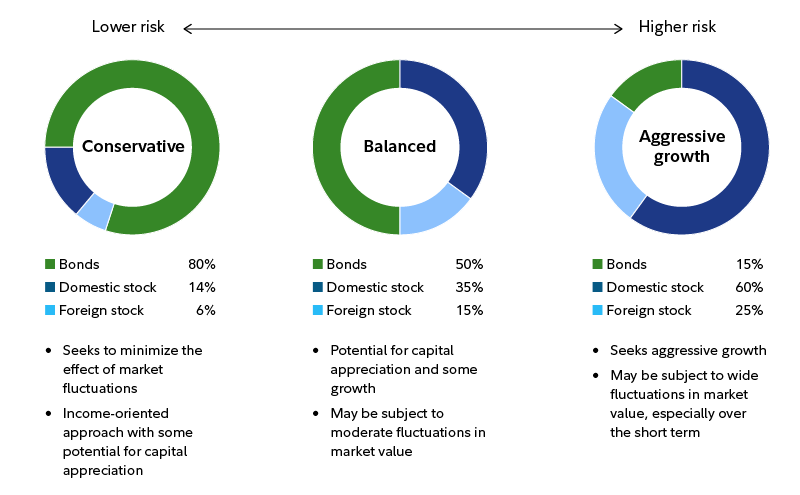
An investor saving for retirement might use a broad U.S. stock ETF as a portfolio foundation. Another investor approaching retirement might combine stock and bond ETFs to adjust risk. Someone seeking international diversification could use a global or ex-U.S. ETF rather than researching individual foreign companies.
This flexibility is one reason ETFs have increasingly become building blocks rather than niche products.
Lower Costs Have Changed What Investors Expect
One of the biggest changes in investor behavior is greater attention to investment costs.
Investors increasingly understand that fees are deducted from returns whether markets rise or fall. A difference of a few tenths of a percentage point may seem insignificant in a single year, but the cumulative effect can become meaningful over decades.
That has helped create an environment in which low-cost investment products compete aggressively for assets.
The ICI has reported declining expense ratios across the fund industry, while passive investment products have continued gaining importance. As of June 2026, indexed domestic-equity mutual funds and ETFs represented approximately 64% of combined domestic-equity assets in the ICI’s active-versus-index series.
The lesson for investors is not that the cheapest ETF is automatically the best ETF. Instead, cost should be considered alongside tracking quality, liquidity, diversification, tax characteristics, portfolio objective, and risk.
For example, suppose two broad-market ETFs provide nearly identical exposure. If one consistently costs more without offering a meaningful advantage, the lower-cost option may be more attractive for a long-term investor.
But an ETF with a slightly higher expense ratio could still make sense if it provides a specific exposure that fits the investor’s objective.
The important shift is that investors are increasingly asking what they are paying for.
Investors Are Using ETFs for More Than U.S. Stocks
The stereotype of the ETF investor is someone buying an S&P 500 fund and holding it for years. That remains a major part of the market, but ETF usage has expanded considerably.
At year-end 2025, large-cap domestic equity ETFs accounted for about $5 trillion, or 38% of ETF assets, according to ICI. Bond ETFs accounted for another $2.2 trillion, or 17%.
That diversification across asset classes is significant.
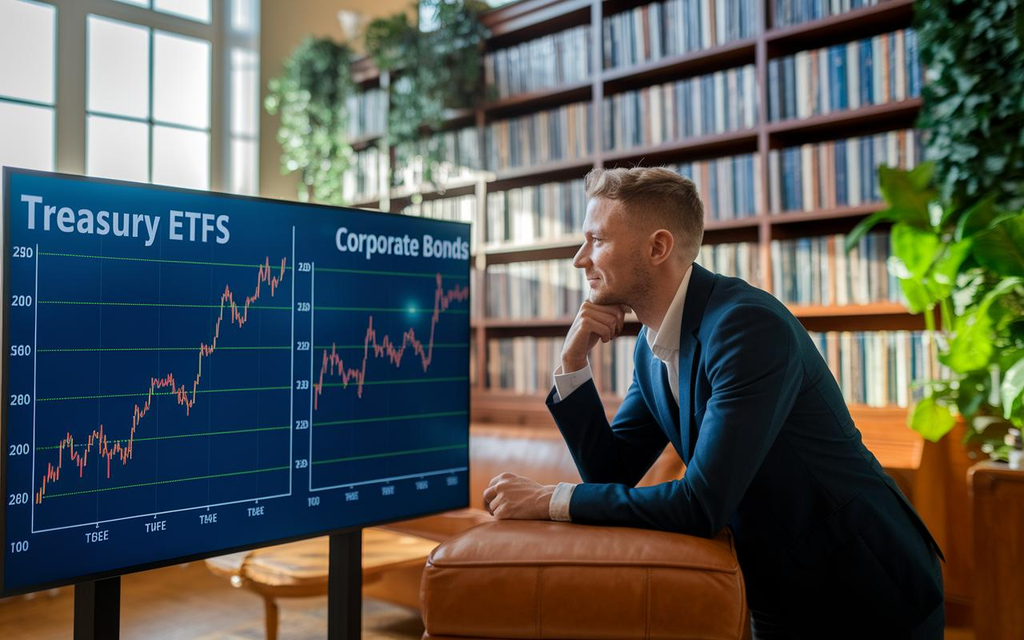
Bond ETFs have become particularly useful for investors who want access to fixed-income markets without purchasing individual bonds. They can provide exposure to Treasury securities, corporate bonds, municipal bonds, or broader fixed-income indexes.
International ETFs have also attracted substantially more attention. ICI reported that net issuance of global and international equity ETFs increased from $97 billion in 2024 to $248 billion in 2025.
That suggests investors are becoming more aware of concentration risk.
A U.S.-only portfolio can perform extremely well during periods when American equities lead global markets. But leadership can change. International diversification gives investors another source of potential returns and reduces dependence on a single country’s market.
The key is that diversification should be intentional rather than reactive. Buying an international ETF simply because foreign stocks recently performed well is very different from maintaining an appropriate international allocation over a full market cycle.
The Rise of Active ETFs Is Changing the Meaning of “ETF”
Perhaps one of the most interesting developments is that ETF growth no longer belongs exclusively to passive investing.
Active ETFs are becoming increasingly important. Morningstar reported that assets in active ETFs reached nearly $1.5 trillion in 2025, after growing 64% during the year. Active ETFs attracted roughly $450 billion in annual inflows.
That matters because it challenges the idea that ETFs are synonymous with passive index tracking.
Active ETFs allow portfolio managers to select securities rather than simply replicate an index, while maintaining the ETF structure. Some investors may find that combination attractive because of potential tax and trading advantages, although those benefits vary by fund and strategy.
The broader market implication is important: investors increasingly care about the vehicle and the strategy separately.
They may prefer an ETF because of its trading structure while still wanting active management. Conversely, they may choose a passive ETF because they want predictable market exposure at a low cost.
The distinction between “ETF investor” and “index investor” is therefore becoming less useful.
What ETF Flows Say About Investor Confidence
ETF flows can provide a useful window into investor preferences, although they should never be interpreted as a perfect prediction of future market performance.
In 2025, ETF net share issuance reached a record $1.5 trillion, up from $1.1 trillion in 2024. ICI also reported strong demand across equity, international, and bond categories.
The trend continued in 2026. For the week ending August 12, 2026, ICI estimated $34.21 billion in ETF net issuance, including $16.48 billion in equity ETFs and $14.48 billion in bond ETFs.
The interesting part is not simply that money is entering ETFs. It is where investors are directing that money.
If investors consistently add to broad-market funds, that suggests a preference for diversified market exposure. Strong bond ETF demand can indicate interest in income, diversification, or portfolio risk management. Increasing international allocations can signal a desire to reduce home-market concentration.
Flows therefore provide clues about how investors are thinking.
They do not, however, tell an individual investor what to buy next.
Investors Are Becoming More Skeptical of the Promise of Stock Picking
Another force behind ETF adoption is the difficulty of consistently outperforming broad benchmarks.
S&P Dow Jones Indices’ SPIVA research found that 79% of active large-cap U.S. equity funds underperformed the S&P 500 in 2025. The figure was 65% in 2024.
This does not prove that active management is useless. Some active managers outperform, and investors may have legitimate reasons to pursue active strategies.
But it does demonstrate how difficult the challenge can be.
For an individual investor, this creates a practical question: if beating the market consistently is difficult even for professional managers with large research teams, how much time and confidence should an individual devote to trying to identify the next winning stock?
For many investors, the answer is to simplify.
Instead of attempting to outperform the market through frequent trading, they may use ETFs to capture broad market returns and concentrate their attention on asset allocation, savings rates, taxes, diversification, and financial goals.
That is a meaningful behavioral change.
What Does This Mean for the Average U.S. Investor?
Consider a hypothetical 42-year-old investor with a stable income, a retirement account, and a separate taxable brokerage account.
A decade ago, that investor might have owned several individual stocks, a handful of mutual funds, and perhaps a few sector funds. Today, the same investor may build the portfolio around a broad U.S. equity ETF, add an international ETF, maintain a bond allocation, and use a smaller allocation for specialized investments.
The second portfolio is not automatically superior. Its success still depends on appropriate asset allocation and investor discipline.
But it may be easier to understand and maintain.
That simplicity can have practical value. An investment plan that an investor understands is often easier to stick with during market volatility.
The investor can also rebalance periodically rather than constantly reacting to headlines.
A sensible ETF selection process should therefore begin with questions such as:
- What is the purpose of this investment?
- What asset class or market does the ETF actually track?
- How diversified is the underlying portfolio?
- What are the fund’s total costs?
- How liquid is the ETF?
- How closely has it historically tracked its benchmark?
- Does it fit the investor’s tax situation and time horizon?
- Is the investment being purchased because it fits a plan or because it recently performed well?
Those questions are more important than whether an ETF appears frequently on financial television or social media.

ETFs Are Convenient, but Convenience Can Create New Risks
The growth of ETFs also creates a paradox.
Because ETFs are easy to trade, investors can make impulsive decisions more easily.
A diversified ETF can become a short-term trading instrument if an investor repeatedly buys and sells based on headlines. Specialized ETFs can also expose investors to concentrated risks that are not obvious from the word “ETF.”
Leveraged and inverse ETFs, for example, are designed for specific objectives and can behave very differently from traditional long-term index ETFs. Narrow sector ETFs can also produce substantial volatility.
Even broad ETFs are not immune to market losses.
If the underlying market declines 25%, a conventional ETF tracking that market will generally decline as well, before accounting for tracking differences and costs.
That is why the ETF wrapper should never be confused with a guarantee of safety.
The SEC’s investor education resources emphasize understanding an investment product’s risks, costs, and objectives before investing. For investors, the practical rule is simple: understand what an ETF owns before deciding whether you want to own it.
The Tax Conversation Is Becoming More Important
Taxes are another reason investors increasingly consider ETFs when choosing investment vehicles.
ETFs can have structural characteristics that may make them tax-efficient relative to some traditional mutual funds, although actual tax outcomes depend on the fund, investor, account type, transactions, distributions, and applicable tax rules.
This distinction matters particularly in taxable brokerage accounts.
For example, an investor who holds a broad ETF for many years may have fewer taxable transactions initiated by the fund than an investor in a strategy with frequent portfolio turnover. But this does not mean ETFs are automatically tax-free or that all ETFs have the same tax characteristics.
Investors should distinguish between tax efficiency and tax elimination.
Retirement accounts introduce another layer because the tax treatment depends on the type of account. Investors should consider consulting a qualified tax professional when investment choices have meaningful tax consequences.
Why ETF Growth Does Not Mean Every ETF Is Worth Buying
The ETF market is now enormous. ICI counted 5,059 ETFs in June 2026, compared with 4,000 one year earlier.
More choice can be useful, but it can also create decision fatigue.
A portfolio does not become better simply because it contains more ETFs.
In fact, holding several ETFs with overlapping holdings can create the appearance of diversification without providing much additional diversification. An investor might own a broad U.S. ETF, a technology ETF, a growth ETF, and several large-cap funds, only to discover that the same companies dominate multiple positions.
This is why investors should examine underlying holdings rather than relying solely on fund names.
A focused ETF can be useful when it serves a specific role. It becomes problematic when an investor accumulates products without understanding how they interact with the rest of the portfolio.
What Changing ETF Choices Reveal About the U.S. Market
The larger story is not simply that ETFs are growing.
It is that the preferences of U.S. investors are evolving.
Investors appear increasingly willing to use funds as flexible building blocks rather than treating investing as a contest to identify individual winners. They are paying closer attention to costs, seeking diversification across countries and asset classes, and showing greater acceptance of both passive and active ETF structures.
The growth of bond ETFs also suggests that investors are thinking more seriously about income and risk management. Meanwhile, international ETF flows indicate that some investors are becoming more conscious of the risks associated with relying heavily on U.S. equities.
At the same time, the growth of specialized ETFs shows that demand for targeted exposure has not disappeared.
In other words, the ETF market reflects two seemingly opposing investor preferences: simplicity at the portfolio level and customization at the individual-investment level.
That combination may define the next phase of ETF development.
Frequently Asked Questions About ETFs
1. Why are U.S. investors choosing ETFs over mutual funds?
ETFs can offer intraday trading, broad diversification, transparent holdings, and competitive costs. Investors may also value their flexibility in taxable brokerage accounts. Mutual funds remain widely used, particularly in retirement plans and professionally managed portfolios.
2. Are ETFs safer than individual stocks?
Not necessarily. A broadly diversified ETF may reduce company-specific risk compared with owning one stock, but the ETF can still decline significantly when the underlying market falls.
3. Are ETFs good for long-term investing?
Many ETFs can be suitable for long-term investing when they provide diversified exposure consistent with an investor’s objectives, risk tolerance, and time horizon. The suitability depends on the specific ETF rather than the ETF structure alone.
4. How many ETFs should an investor own?
There is no universal number. A portfolio containing a few complementary ETFs may provide substantial diversification, while owning many overlapping ETFs can add complexity without meaningfully reducing risk.
5. What should I look for when choosing an ETF?
Review the fund’s objective, underlying holdings, expense ratio, benchmark, tracking history, liquidity, bid-ask spread, tax considerations, and risk characteristics.
6. Are ETF fees really important?
Yes. Costs reduce investment returns over time. However, investors should compare total costs and fund quality rather than automatically selecting the fund with the lowest advertised expense ratio.
7. What are active ETFs?
Active ETFs are exchange-traded funds in which portfolio managers generally have discretion to select investments rather than simply tracking a predetermined index.
8. Are bond ETFs appropriate for retirees?
Bond ETFs can provide fixed-income exposure and diversification, but they still carry risks such as interest-rate risk, credit risk, and market-value fluctuations. The appropriate allocation depends on the individual’s financial circumstances.
9. Can ETFs lose all their value?
A diversified traditional ETF tracking a broad market would generally be expected to retain value even during severe downturns, but losses can be substantial. Highly concentrated, leveraged, or specialized ETFs can carry materially different risks.
10. Is ETF investing better than picking individual stocks?
It depends on the investor’s objectives and capabilities. ETFs can provide diversification and reduce the need to select individual securities, while individual stocks give investors direct exposure to specific companies. Neither approach guarantees better returns.
When the ETF Becomes the Portfolio’s Architecture
The most important development in ETF investing may be the shift from product selection to portfolio design.
Investors are no longer simply asking which fund might perform best. Increasingly, they are asking how different funds can work together to create a portfolio that matches their objectives.
That is a healthier way to think about investing.
A broad-market ETF can serve as a core holding. International exposure can address geographic concentration. Bonds can play a role in diversification and income. Active ETFs can provide a specific management approach where an investor believes it adds value. Specialized funds can be used selectively when there is a clear reason for including them.
The challenge is maintaining discipline.
ETF availability makes sophisticated portfolio construction accessible to ordinary investors, but accessibility does not eliminate the need for judgment. Investors still need to understand risk, valuation, taxes, time horizon, and behavior.
The growing ETF market ultimately says something encouraging about U.S. investors: many are becoming more deliberate about the mechanics of investing. They are paying attention to costs, diversification, transparency, and the role each investment plays.
The next stage of ETF investing may therefore be less about owning more products and more about using fewer, better-understood tools to build portfolios that investors can actually stick with.
Signals Worth Remembering From the ETF Shift
- U.S. ETF assets reached approximately $15.7 trillion in June 2026.
- About 19.8 million U.S. households owned ETFs in 2025.
- ETF net share issuance reached a record $1.5 trillion in 2025.
- Bond and international ETFs are becoming increasingly important parts of investor portfolios.
- Active ETFs are growing rapidly alongside traditional passive products.
- Lower costs have become a major consideration for investors.
- ETF convenience can encourage both disciplined investing and impulsive trading.
- A larger number of ETFs does not automatically create greater diversification.
- Investors should evaluate an ETF based on its underlying exposure, costs, risks, and role in the portfolio.
- The broader trend points toward more deliberate, flexible, and portfolio-oriented investing.